Suki Autopilot
Diagnoses grocery-chain branch problems, proposes stock transfers and markdowns, and records evidence before taking action.
- result
- On a fresh simulated grocery-chain dataset, one run takes 28 actions covering ₱314,652: about ₱50K applied automatically and ₱265K awaiting approval. These are demo figures, not savings from a real business.
- my contribution
- Solo hackathon build: MCP tools, action policy, integrations, and dashboard.
- 2026
- ai
how it works
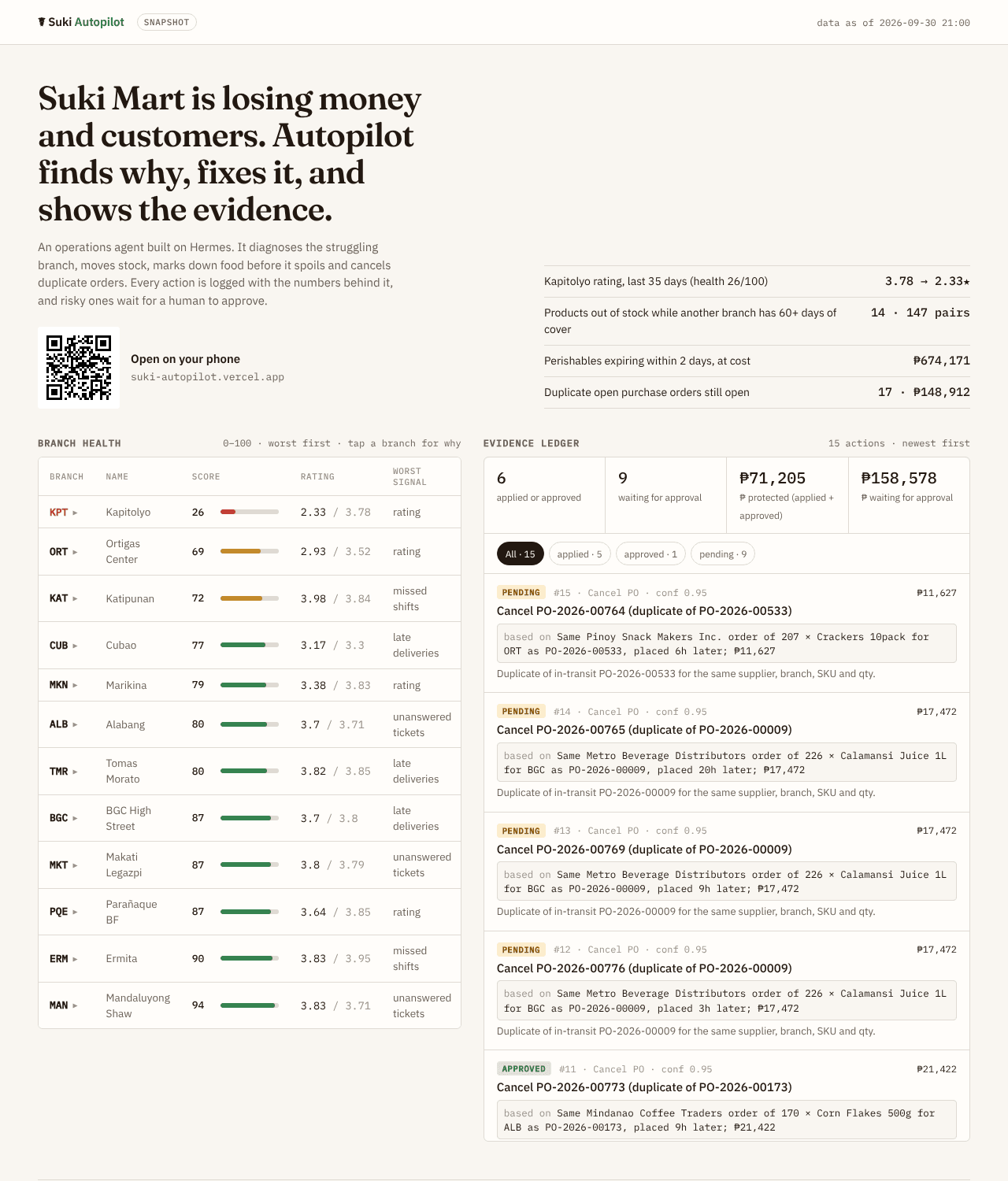
Suki Mart is a fictional 12-branch grocery chain in Metro Manila: one SQLite file, about 230,000 rows across 18 tables and six months of history. Its Kapitolyo branch is failing. The rating fell from 3.78 to 2.33 in 35 days, missed shifts run at about double the chain average, and the bad reviews are about empty shelves and messy stores. Elsewhere, 14 products are out of stock at one branch while another holds 60+ days of them, ₱674K of perishables expire within two days, and 18 duplicate purchase orders are still open.
I built Suki Autopilot solo on Hermes Agent for the CAMP / RUN hackathon (Business Operations track), owning the tools, action policy, integrations, and dashboard. Two MCP servers expose 24 narrow tools, each answering one business question; there is no generic SQL tool. One skill chains them: diagnose the branch, find the problems, act, and log. On a fresh simulated dataset one run takes 28 actions covering ₱314,652: about ₱50K fixed instantly and ₱265K one Approve away. Managers drive it from a Hermes Desktop pane, from Telegram in English, Tagalog or Taglish, and watch a public read-only dashboard that updates within seconds.
engineering details
- Put the risk policy in code: transfers apply on their own only at 100 units or fewer with the donor keeping 14+ days of cover, markdowns only up to 30% off, and PO cancellations never. Everything else waits for a manager.
- Wrote every action to an evidence ledger before applying it, with the numbers behind it, so each card on the dashboard shows what was changed and why.
- Made every action tool validate its input, write nothing on an error, and refuse to repeat an action that is already live, so a re-run of the autopilot cannot double-move stock.
- Had each tool return a ready-made directive the skill pastes unchanged, so the model never writes action numbers or peso figures itself.
- Recounted the duplicate-PO problem from the data: the brief's "32 pairs" counted every pairwise match including received orders; the real figure is 18 open duplicates worth ₱170,334.
- Mirrored the ledger and branch health to Neon after every action through a SELECT-only role for the public site. If the sync fails, the local action still succeeds and the tool result says so.
in the product
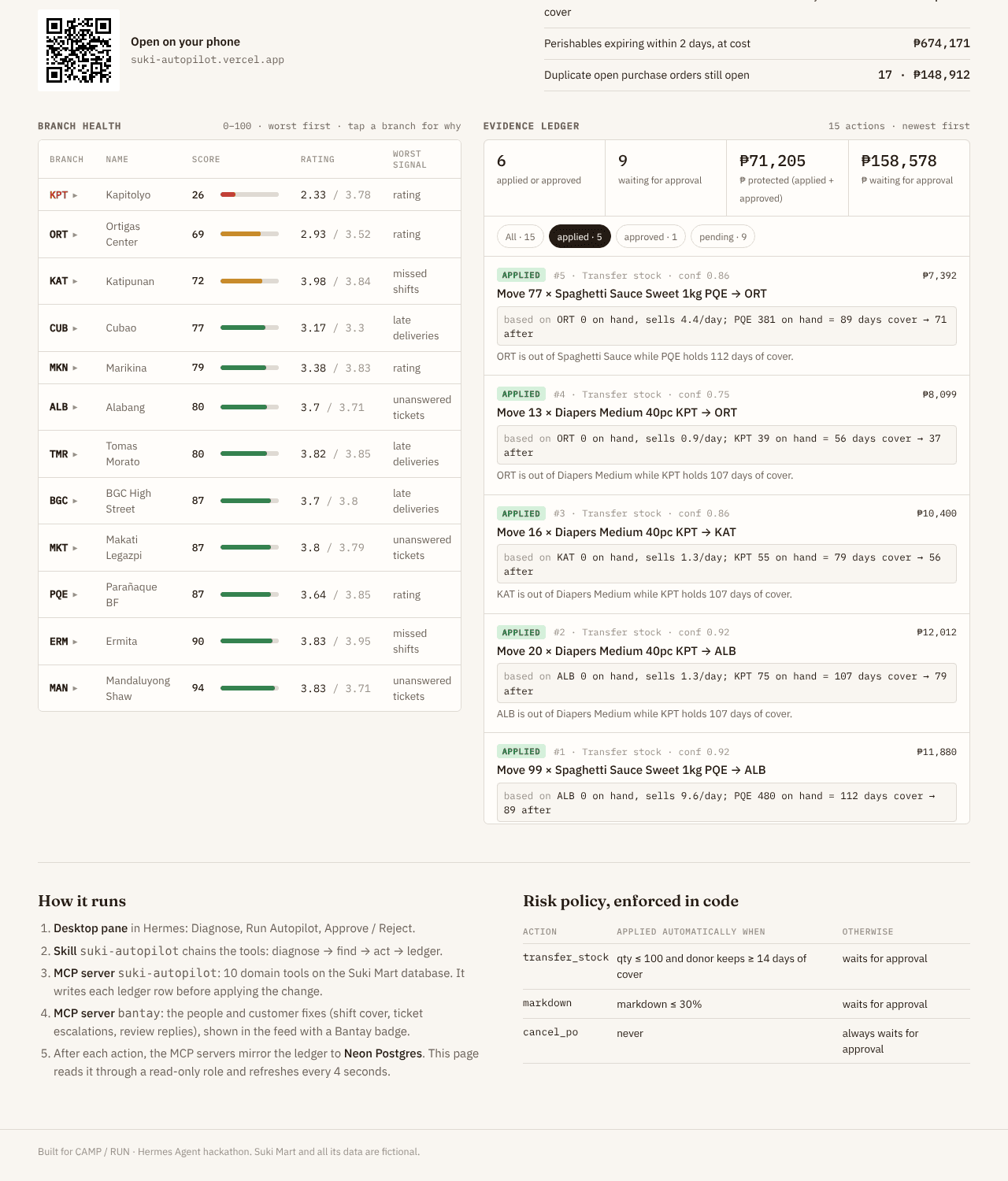
Evidence for Every Decision
The live dashboard shows the problems found in the data, branch health worst first, and an evidence ledger where every action carries the numbers it was based on. Cards flash when a manager approves them.
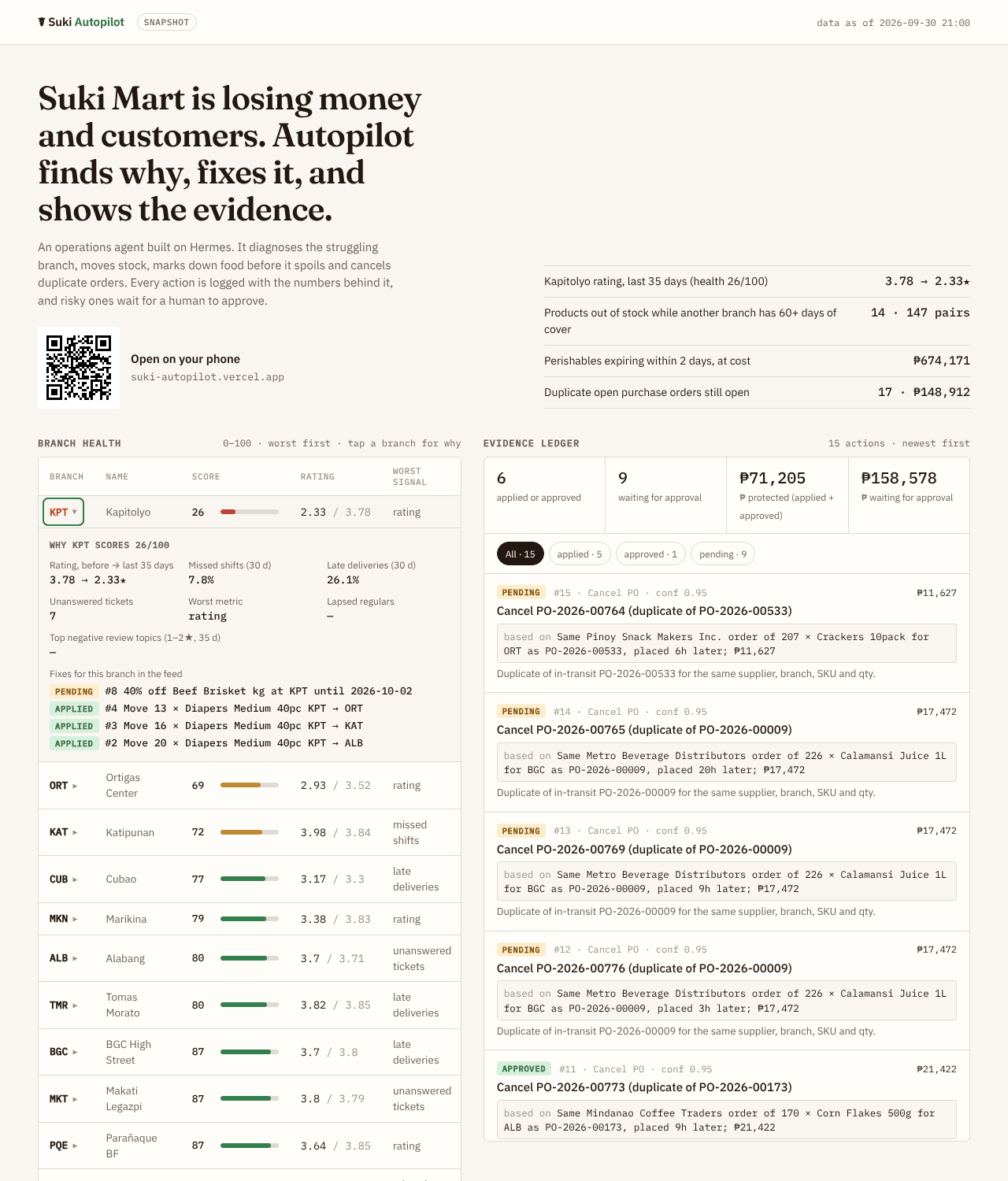
Why Kapitolyo Is Failing
Tapping a branch shows why it scores what it does: rating before and after, missed shifts, late deliveries, unanswered tickets, and the fixes already in the feed for it.
Safe Moves Apply, Risky Ones Wait
Small stock transfers apply automatically, each showing on-hand and days of cover before and after. Deep markdowns and PO cancellations wait for approval in Hermes Desktop or on Telegram.